(c) Ian Jindal
district: New York, Chelsea
75 9th Ave Suite 1A55, New York, NY 10011

In a nutshell

Muji Chelsea has evolved into a two‑part hub where New Yorkers pick up storage boxes and socks on 19th Street and grab onigiri and robot‑made lattes in Chelsea Market, quietly expressing the brand’s “no‑brand” philosophy in the middle of Manhattan. A focus on circular products, customisation and food provides a background for activations and community engagement.

The store replaces a previous favourite, Neighborhood Goods, and the interior (including the food bar) is largely unchanged.

In their words

"MUJI Market is a new concept space developed to cultivate discovery, creativity, and connection. Located in the historic Chelsea Market, MUJI Market will house various conceptual collections, community activations, and support local initiatives to build a hub of inspiration and communication". Per the store's webpage.

Brand Background

Muji (short for Mujirushi Ryōhin, “no‑brand quality goods”) was established in 1980 as a private label for Seiyu supermarkets, featuring just 40 everyday products. These products were conceived as a reaction against branded excess, offering simple, well-made, minimally packaged goods at reasonable prices. The first directly operated Muji store opened in Aoyama, Tokyo, in 1983, and international expansion followed in the early 1990s with a London store in 1991. Today, Muji operates more than 700 stores globally, offering around 7,000 SKUs across clothing, household goods, stationery, furniture, and food, all designed around a consistent philosophy of modesty, functionality, and environmental consideration.

Muji’s New York story began in 2007 with a store in the Times Square area, followed in 2008 by Muji Chelsea, which opened on November 28, 2008, at 16 West 19th Street, between Fifth and Sixth Avenues. The launch press release framed it as the brand’s third US location and its first in a more residential, neighbourhood context, aimed at serving “everyday life” with a broad assortment of apparel, bedding, storage, kitchenware and stationery. The Chelsea store has since become a staple for locals, with NYC Tourism describing Muji broadly as a place that “stocks a wide variety of products, ranging from clothing to bed linens and furniture to coloured pencils,” and listings noting the breadth of home and lifestyle goods packed into the modest‑sized space.

In 2024–25, Muji expanded its Chelsea presence by opening Muji Market, a food-led concept within Chelsea Market at 75 Ninth Avenue. Chelsea Market’s own directory describes Muji Market as “a new concept space” for discovery and community, hosting conceptual collections and activations in addition to its core food offer.

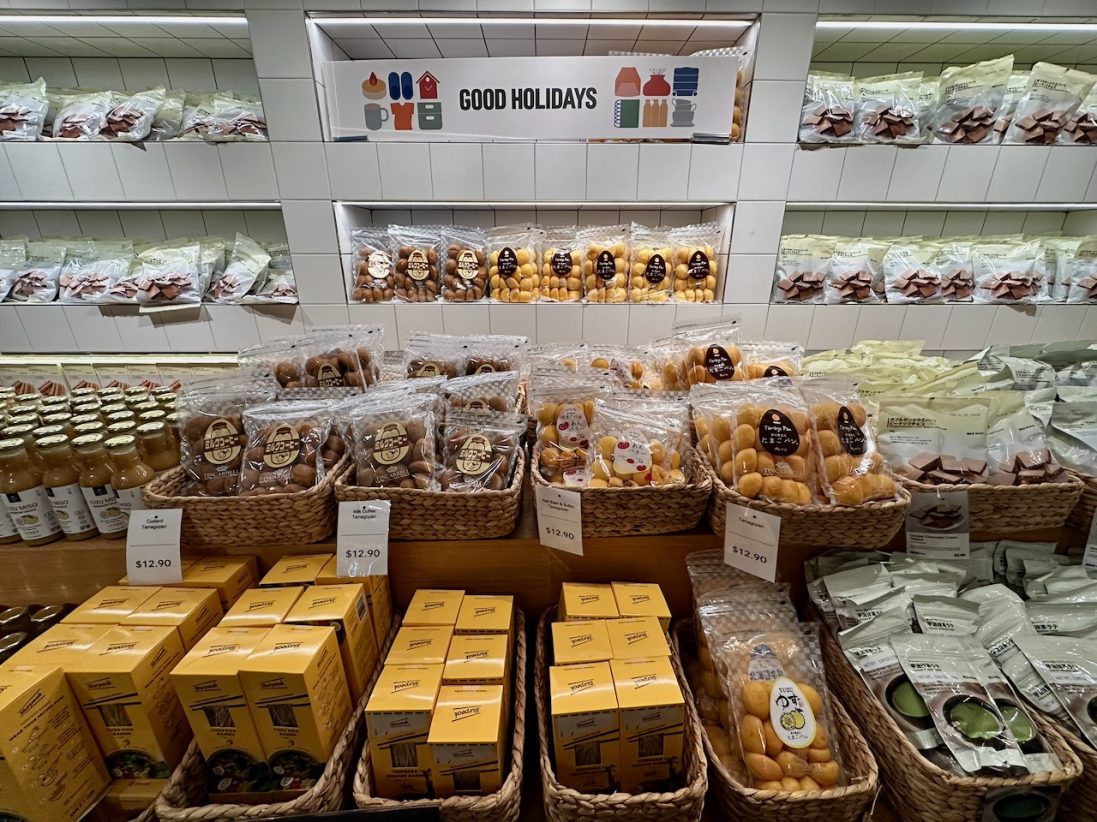
Eater NY reports that the Muji Food Market inside the Chelsea Market store is the brand’s first food market in the United States, serving onigiri, tamago sandwiches, Japanese curry bowls, dorayaki and pastries, alongside shelf‑stable snacks and pantry items imported from Japan. A small café area at the rear of the home store features a robot barista named Jarvis, which prepares black sesame lattes and other drinks - a novelty that has drawn TikTok attention and some debate about automation versus character in New York’s coffee scene.

Visit Field notes

The Chelsea cluster offers a compact view of Muji’s global strategy in a single neighbourhood: a classic, multi‑category Muji store on 19th Street executing the core “no‑brand” promise through home and apparel, and a newer, more experimental Muji Market in Chelsea Market using food, tech and events to localise the brand and drive frequent, low‑ticket visits. The pairing demonstrates how a mature global retailer can evolve its concept mix in place, shifting from pure product shelves to a broader lifestyle ecosystem while remaining coherent with its long-standing philosophy of simplicity and quiet utility.

The store is unassuming and small-scale, with the whole store visible from the entrance. There are two entrances (one from inside Chelsea Market) and so a circulation of people. The Chelsea Market entrance offers food and cafe, while the 9th Avenue entrance is a more traditional store entry with on-street windows. Throughout the store there are 'nooks' and side-rooms, showcases launches, activations and information.

Checkout

  • the food and 'market' offerings at the rear of the store
  • "Jarvis" the robot coffee-maker (either surrounded by TikTok tourists, or out of action!)
  • the bar area as a feature, but usage is far from all-day and intense
  • the side-areas focused on customisation and circular products
  • note the 'order online collect in store" offering for food - idea for an office-dense area and draw repeated footfall - https://www.mujifoodmarket.com/

Other Reading

Store page on Muji USA

Eater's review of the store opening in early 2025

Buzzfeed's visit notes, showing Jarvis in action and ordering food


LAST VISITED

11/11/2025

Added

2025

COMPARE WITH

IMG_0396
An intense, monochrome red jewel-box that fuses trunkmaking heritage with Dame Pat McGrath’s high-drama cosmetics vision, this Prince Street pop-up shows how Louis Vuitton can prototype a full beauty ...
jindal-1101358
A boutique of handmade Turkish slip-on shoes and curated crafts clothing and accessories. A cosy post-pop-up home for this growing owner-led brand.
nD_5yOMasQ8mBU8ar54f0I0c3t74DIeAPo-oaR7TRdA
British architect Sophie Hick's minimalist take on Alaia's move from wholesale to D2C.
IMG_8962
EMPREINTES—Paris’s leading artisan craft concept store. It is a destination concept store in the heart of the Haut Marais, devoted exclusively to showcasing French arts and crafts through more than 1,...

Similar shops

IMG_2507
A pop-up store for winter 2024-5 in the heart of Soho. A "locker-room" fit-out and plenty of red vinyl is in keeping with the brand's values. The store blends NYC-specific products with promotions.
IMG_8922
Ami Paris is in the vein of US street brands (like Aime Leon Dore), where Ami Paris  infuses classic French cool and everyday elegance, championing inclusivity and authenticity, in an understated, Par...
IMG_6428
Casually expensive clothing, with a cool-girl vibe (American Womenswear Designer of the Year 2022, the brand has a direct confidence that is mirrored in the robust, stark yet luxurious flagship store.
IMG_6544
This store encapsulates the vision to be the future of the pet industry - services, expertise, learning and health. A real destination.
IMG_7488
Architecturally-led, train-shed-chic flagship for the luxury jewellery brand.
IMG_0407
A cool, meticulously lit luggage gallery that trades airport anxiety for downtown ease, this Mercer Street flagship shows how Rimowa can use architecture, archives and collaborations to position itsel...
Review Your Cart
0
Add Coupon Code
Subtotal