In a nutshell
A sprawling, high‑ceilinged temple to heavyweight cotton and saturated colour, with a last-century trash vibe that will challenge Millenials' and GenXers' understanding of retail progress, this Broadway flagship tests whether Dov Charney’s made‑in‑LA basics machine can turn ethical manufacturing and 90s‑tinged nostalgia into a compelling alternative to global fast fashion in SoHo. The irony that the flagship is in the former Top Shop building is not lost on those who track the evolution of youth, accessible and fast fashion.
In their words
"We Are Passionate About Doing Things Differently.
We are contrarians, deeply focused on sustainability and efficiency in order to advance the interests of our customers, our workers, our shareholders, the community and the world."
Brand Background
Los Angeles Apparel was founded in 2016 in South Central Los Angeles by Dov Charney, the controversial founder and former CEO of American Apparel after he left that company’s board.
Charney established Los Angeles Apparel as a vertically integrated basics manufacturer, explicitly referencing American Apparel’s original wholesale model: all garments are cut and sewn in a large LA factory complex, with a stated mission to
- pay higher-than-average wages
- keep lead times short, and
- use locally knit fabrics.
The brand built its reputation by supplying heavyweight 1801 T-shirts and fleece blanks in saturated garment-dye colours to streetwear labels and print shops, before gradually expanding into direct-to-consumer basics across unisex, women’s, and kids’ categories.
For several years retail was limited to an LA Factory Store attached to the production site, but as the brand’s consumer profile grew - helped by TikTok coverage and a wave of “American Apparel is back?” media takes - Los Angeles Apparel began to explore standalone shops.
The SoHo flagship at 480 Broadway, which opened 30 August 2025, is only its second store after the LA Factory Store and its first outside California.
Visit Field notes
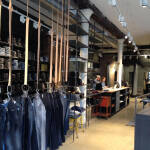
The first impression is of an imposing 24,687-square-feet-across-five-levels landmark cast‑iron building "kapow", yet it's also a low-rise, high-ceilinged void. As if the store is a discounter, squatting between tenants.
Inside, the low-level, dense cacaphony continues - part 90s student space, overcrowded wardrobe or well-organised thrift store.
The mannequins, poses, and artworks all conjure Hugh Hefner's take on 90s LA as much as NYC loft chic. It takes a moment to recalibrate to the last century and remember this is a clothes store, sporting Gen Alpha sustainability creds and Made in America bona fides.
In the marketing material by the landlord (KPG Funds) the space was described as a "superstore", with upgraded infrastructure, preserving the 19th-century architecture with a modern retail fit-out. There is no sign of that grandeur or finish when you enter the store - the height is wasted
The use of hanging mannequins, mobiles and large‑scale graphics to use of the volume is reminscent of a student's dorm - instantly filling a space to "make it theirs", but the emphasis is upon speed and limited cost per square foot. It's dressing, not design.
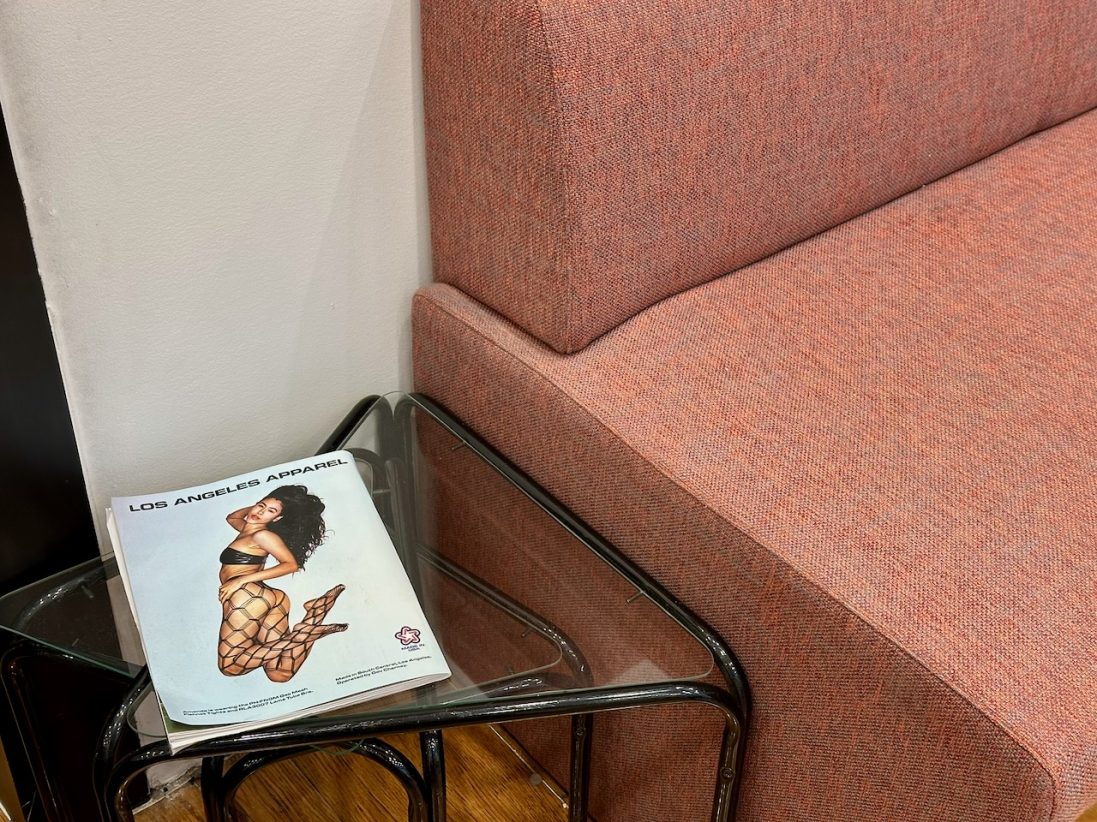
Art and vintage collectibles dot the space, referencing Los Angeles cultural tropes and the iconography of the 19080s and 1990s. Indoor seating zones invite shoppers to sit and browse the Crafted with Pride in USA directory and other reading materials about domestic manufacturing, but this feels rather disjointed (compare to the brand messaging in stores from Patagonia to Wegmans).
The densely stacked racks convey the 'factory-to-store' supply model, and further emphasises the accessible pricing.
The store is undoubtedly a statement bet on physical stores at a time of fragmented, social-media and fast-fashion retail.
The focus on onshore production (with every garment made in South Central Los Angeles) aligns with the times, and it can be seen as a re-run of the American Apparel playbook of vertically integrated basics with provocative aesthetics. However, commentators have noted that Dov Charney now operates in a culture that's far more aware of labour and power dynamics than when American Apparel first arrived in NYC in the 2000s.
The store offers a live test of whether a heavily founder‑coded brand built on US manufacturing can scale its aesthetics and ethics into a high‑rent flagship while carrying the weight of that backstory.
Checkout
- Your response to the high-ceilinged space - temple or void?
- the dense racking of clothes
- labels and information on LA production, sustainability, labour conditions
- the vintage chairs, seating areas and style magazines
- compare the wall-mounted mannequin torsos, legs and product to the displays at Skims - both skirt irony, but the effects are very different.
Other Reading
- Los Angeles Apparel's store page
- Fashion United's store review on opening
- Review of the store, with useful comparisons with the West Coast stores and brand history in Vernon Proper's article.
- Background to the brand and leadership on DTL
- Wikipedia pages on Los Angeles Apparel and founder Dov Charney.