In a nutshell
Lego showcases everything it's learned in several previous flagships. Great range, activities, programming and interaction - a case study in a brand store. A dense, two-storey playground of bricks, tech and New York iconography, this flagship shows how Lego can use experiential theatre and co-creation to justify Fifth Avenue rents while quietly stress-testing the future of its global store format.
In their words
"An entirely new retail experience, the Fifth Avenue store features the most famous landmarks and icons of NYC built larger-than-life in LEGO bricks, alongside brand-new, one-of-a-kind immersions and interactive experiences with play at the heart. The LEGO Store on Fifth is the flagship location in a new retail format expanding globally."
Brand Background
The Lego Group was founded in 1932 by Ole Kirk Christiansen in Billund, Denmark, originally as a small carpentry workshop producing wooden toys, before shifting to plastic interlocking bricks in the late 1940s and patenting the modern Lego brick in 1958. Over nine decades the company has evolved into a global family-owned business with a mission “to inspire and develop the builders of tomorrow,” leveraging a system-of-play that spans physical sets, digital experiences, films, games and education programmes. The brand’s retail strategy is deliberately used to extend that mission into physical space: Lego has more than 1,000 branded stores worldwide and continues to open around 100 new locations per year, positioning its flagships in high-footfall destinations such as London’s Leicester Square, Disneyland and New York’s Fifth Avenue.
The 5th Avenue flagship opened in June 2021 at 636 Fifth Avenue, within the Rockefeller Center complex, replacing a smaller Lego store nearby. At 7,175 square feet across two floors, it was the first Lego store globally to debut a new experiential format developed over two years by Lego’s in-house retail team with partners including W40 Design and SAS International. Press releases describe the store as a “glimpse into the future of experiential retail,” with features that blend physical builds and digital interactivity and that will roll out to more than 100 stores worldwide.
Visit Field notes
For once, a queue outside a store is worth it. The ground floor is zoned into larger models and sets, while the upper floor houses specialised areas, learning and interaction as well as a theatres for presentations and build-alongs. The staff - in white lab coats - are as interactive as the best Disney cast-member. No pressure, no push, just a thorough love of Lego. Includes the Mosaic Maker, a minifigure factory and the Brick Lab (a bookable 20-minute mixed-reality experience where guests build physical models, scan them and see them animated at room scale on projection-mapped walls and floors). Brilliant brand flagship.
Checkout
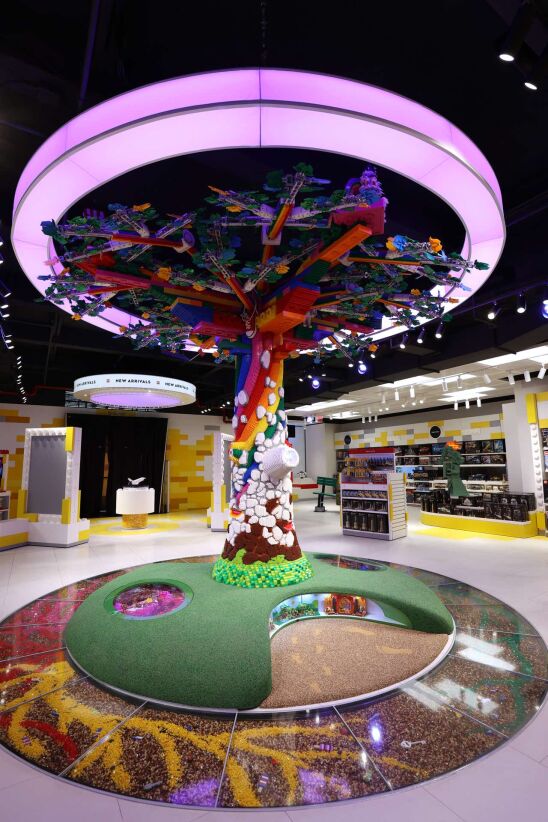
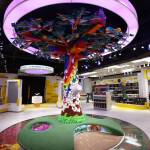
- The store’s centrepiece is the Tree of Discovery - an 880,000-brick sculptural tree with a kaleidoscopic core that reveals small “story worlds” and sustainability messages as visitors explore it. A Storytelling Table for adult fans of Lego surfaces prototypes, designer sketches and behind-the-scenes narratives, while multiple larger-than-life city builds - a yellow taxi you can sit in, skyscrapers including the Empire State Building and One World Trade Center, the Brooklyn Bridge and a talking Statue of Liberty - localise the concept to New York.
- Note the data and learning opportunities. For Lego, the Rockefeller Center flagship is not just a tourist magnet but a live lab for “research in play.” Design and retail publications note that customer behaviour in 5th Avenue - how long families spend in the Brick Lab, which zones attract teens versus adults, how many visitors convert from play to purchase - directly informs the layout, services and technology investments in subsequent flagships from Munich to Battersea Power Station.
Other Reading
Lego's launch announcement